🎁 Get your Christmas shopping done early and save! 🔥 Enjoy 15% off everything until 12 October. 🛍️

Acupressure Points on the Feet: A Map of Your Body’s Health Beneath Your Feet
Did you know that each foot contains more than 7,000 nerve endings? Our feet do much more than support us as we walk, run, and stand—they are often described as a map of the entire body. For thousands of years, Traditional Chinese Medicine has emphasized the connection between specific areas of the feet and different organs and body systems. Today, modern physiotherapists and movement specialists are increasingly recognizing the important role feet play in posture, balance, and overall well-being.
Whether you're looking for a natural way to support your family's health, encourage healthy foot development in children, or simply add more relaxation to your daily routine, foot stimulation can be a valuable addition to a healthy lifestyle.
What Are Foot Reflexology and Acupressure?
Acupressure is a traditional practice that involves applying pressure to specific points on the body to stimulate natural processes and promote balance.
Foot reflexology follows a similar principle. According to reflexology, different areas of the feet correspond to various organs and body regions. Stimulating these reflex zones may help promote relaxation, improve circulation, and support overall wellness.
Today, foot reflexology is widely used as a complementary therapy by physiotherapists, podiatrists, and wellness professionals around the world.
A Guide to Acupressure Points on the Feet
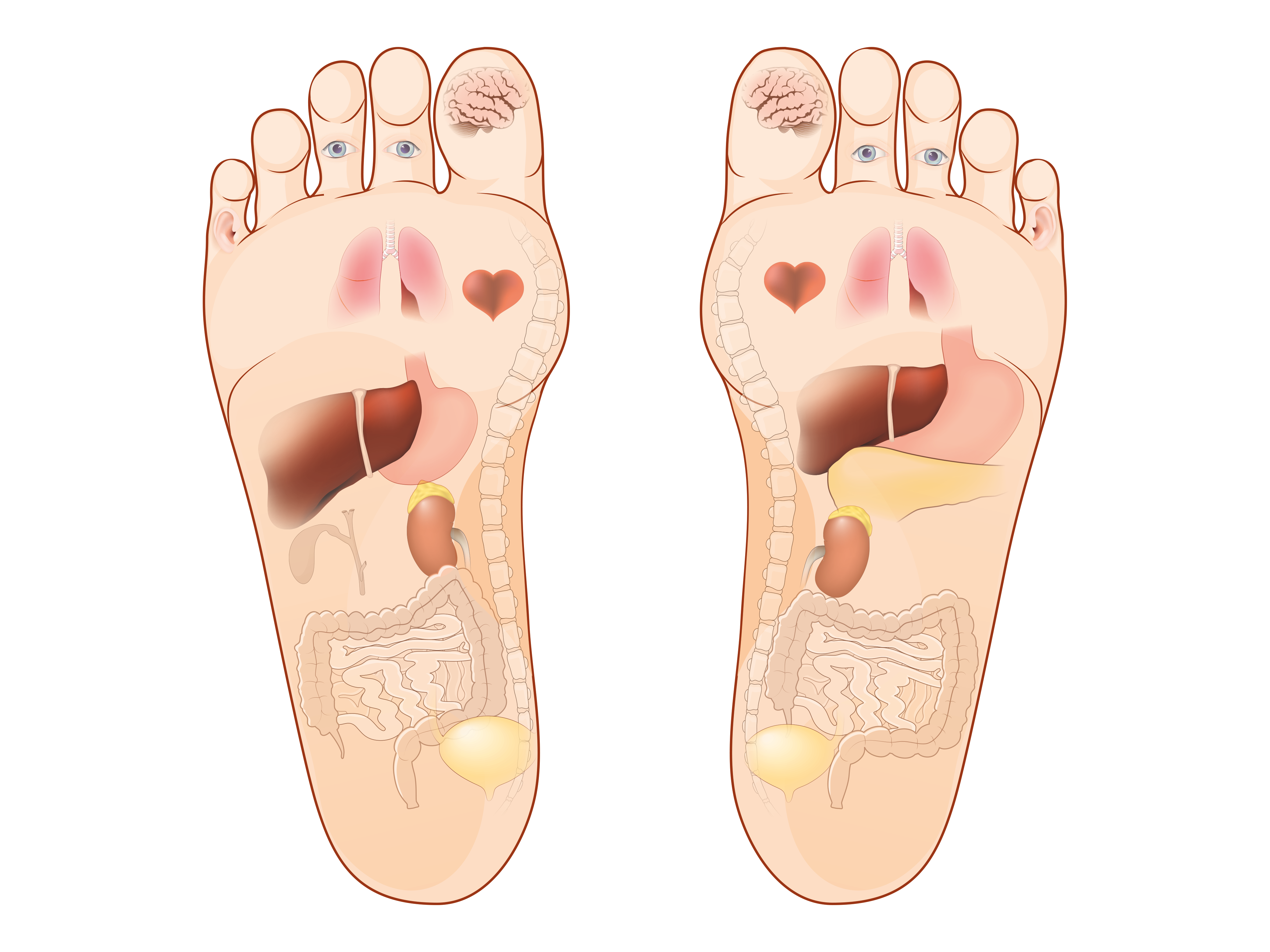
🦶 Toes – Head and Sensory Organs
The toes are traditionally associated with the head, brain, eyes, ears, and sinuses. The big toe, in particular, is often linked to the nervous system and mental well-being.
Many people find that gently massaging their toes helps them unwind after a stressful day or periods of mental fatigue.
🦶 Ball of the Foot – Chest and Breathing
The area beneath the ball of the foot is commonly associated with the lungs, heart, and respiratory system. Stimulating this region can encourage relaxation and greater awareness of breathing patterns.
🦶 Middle of the Foot – Digestion and Metabolism
The arch and center of the foot are connected in reflexology to the stomach, intestines, liver, pancreas, and kidneys. This area is one of the most frequently targeted zones during a reflexology session.
🦶 Heel – Pelvis and Lower Back
The heel is traditionally linked to the pelvic region, hips, sciatic nerve, and lower back. Many people focus on this area when dealing with tension caused by prolonged sitting or physical strain.
🦶 Inner Edge of the Foot – Spine
The inner arch mirrors the shape of the spine, from the heel to the big toe. Because of this connection, healthy foot arches are often considered important for maintaining proper posture and movement patterns.
🦶 Outer Edge of the Foot – Shoulders and Limbs
The outer side of the foot is associated with the shoulders, arms, knees, and hips. Stimulating this area can feel particularly pleasant after exercise or physical activity.
What Are the Benefits of Foot Stimulation?
Foot reflexology is not a substitute for medical treatment, but many people use it as part of a holistic wellness routine.
It is commonly used to support:
✅ Relaxation and stress relief
✅ Healthy circulation
✅ Recovery after physical activity
✅ Better body awareness
✅ Improved balance and coordination
✅ Relief from everyday tension
✅ Overall well-being
Why Foot Stimulation Matters for Children
Foot stimulation plays an important role in a child’s physical development. The feet provide essential sensory input that helps children develop balance, coordination, stability, and body awareness.
In nature, children walk across a wide variety of surfaces—grass, sand, pebbles, tree bark, and forest trails. These natural textures challenge the feet and help strengthen muscles that support healthy movement.
Modern lifestyles often limit these experiences. Many children spend most of their time on flat, smooth surfaces such as tiles, laminate flooring, or carpets.
This can contribute to:
❌ Weak foot arches
❌ Reduced muscle activation
❌ Poor balance and coordination
❌ Limited sensory stimulation
That is why many physiotherapists and podiatrists encourage children to spend time barefoot whenever possible.
“MUFFIK orthopedic mats are an excellent everyday tool for activating and relaxing the feet. Their greatest advantage is the variety of textures, which allows children and adults to develop balance, stability, strength, and coordination in a fun and natural way.”
Jaroslav Otáhal, Physiotherapist and Certified Barefoot Specialist
Bringing Nature Indoors with MUFFIK Orthopedic Mats
Walking barefoot outdoors is one of the best ways to stimulate the feet—but it isn't always practical. MUFFIK orthopedic mats bring the experience of natural surfaces into your home.
Each mat is inspired by a different outdoor texture, creating sensory experiences that mimic grass, pebbles, forest paths, and other natural terrain. The individual pieces can be connected to create a custom indoor sensory path or barefoot sensory trail for children and adults alike.
The result is a fun and engaging activity that combines movement, play, and foot stimulation.
How Do MUFFIK Mats Work?
- 🟢 Soft surfaces such as Grass or Meadow gently stimulate the feet and are ideal for beginners and young children.
- 🔴 Textured surfaces inspired by pebbles, cones, and uneven terrain provide stronger sensory input and encourage active foot engagement.
- ⚪ Balance stones and 3D elements challenge stability, coordination, and body control while making movement more exciting.
Every step provides natural stimulation that can help:
👉 Activate foot muscles
👉 Encourage healthy arch development
👉 Improve balance and coordination
👉 Support proper posture
👉 Enhance sensory and motor development
Why Parents Choose MUFFIK
MUFFIK sensory mats are trusted not only by families but also by physiotherapists, podiatrists, occupational therapists, schools, and childcare centers.
Parents appreciate that the mats combine movement and play while supporting healthy physical development.
Because the pieces can be rearranged in countless ways, children stay engaged and motivated to explore new challenges.
Looking for a first birthday gift? A MUFFIK set is a popular choice for parents seeking meaningful gifts that encourage movement, sensory exploration, and active play.
🇪🇺 Made in the European Union – crafted in the Czech Republic
🧪 Certified and safe – EN 71 certified, BPA-free, and phthalate-free
👨⚕️ Developed with healthcare professionals and physiotherapists
♻️ Sustainably produced using recyclable materials
Simple Ways to Stimulate Your Feet Every Day
1. Walk Barefoot
Whenever possible, spend time walking barefoot on different surfaces such as grass, sand, pebbles, or natural ground.
2. Create a Sensory Path at Home
An indoor sensory path made from textured mats provides daily opportunities for foot stimulation, balance training, and sensory development.
3. Include Balance Activities
Balance stones and stepping challenges help strengthen the lower body while improving coordination and confidence.
4. Massage Your Feet
A few minutes of foot massage before bedtime can be a relaxing way to unwind after a busy day.
5. Use Contrast Foot Baths
Alternating warm and cool water can help refresh tired feet and stimulate circulation.
Every Step Matters
Our feet carry us through life, yet they are often overlooked. Whether through foot reflexology, barefoot walking, or regular use of orthopedic sensory mats, paying attention to foot health can positively influence movement, posture, balance, and overall well-being.
For children, healthy feet provide a strong foundation for future development. For adults, they offer a simple way to stay active, connected to the body, and mindful of everyday movement.
Take the first step—literally. Kick off your shoes, reconnect with your feet, and discover how much difference a little daily stimulation can make.